There’s never a good time for your oven to quit—but it always seems to happen with a full house coming over and a dish half-prepped on the counter. The good news: an oven that won’t heat is one of the most common repairs we handle here in Queen Creek and the East Valley, and it’s often a smaller fix than people expect.
Before you start shopping for a brand-new range, here’s an honest breakdown of what usually goes wrong, what’s safe to check yourself, and how to know when it’s time to call.
First things first: is it safe to keep using?
If you have a gas range and you smell gas, stop. Turn off the appliance, don’t use any open flames or switches, and get fresh air into the room. A faint gas smell when the burner is lighting is normal; a strong or lingering smell is not. When in doubt, shut it off and call a professional.
For electric ovens, if you see sparking, smell burning plastic, or the breaker keeps tripping, leave it off until it’s been looked at. Those are signs of an electrical fault, not something to push through.
The most common reasons an oven won’t heat
Electric ovens
- A failed bake or broil element. This is the number one culprit. Your electric oven has two heating elements—one on the bottom (bake) and one on top (broil). When an element burns out, you’ll often see blistering, a visible break, or no glow at all when it should be heating. If only the top or only the bottom works, this is usually why.
- A faulty temperature sensor. This small probe inside the oven tells the control board how hot things are. When it drifts or fails, the oven may not heat, may run wildly hot or cold, or may quit partway through.
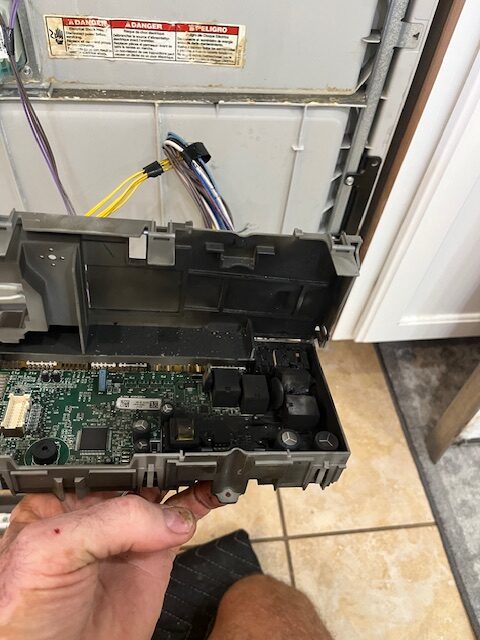
- A bad control board. The brains of the operation. If the board fails, the oven may not respond, may throw an error code, or may heat inconsistently.
Gas ovens
- A weak or failed igniter. This is the most common gas-oven failure by far. A worn igniter glows but doesn’t get hot enough to open the gas valve, so you get a faint click, maybe a glow, but no flame. If your oven takes forever to heat or never lights, the igniter is the first suspect.
- A faulty safety valve or gas valve. Less common, but it stops gas from reaching the burner.
- A bad temperature sensor or control board, same as on the electric side.
What you can safely check yourself
A few things are worth a quick look before you call anyone:
- Confirm the settings. Make sure you’re not in a delay-start, Sabbath, or demo mode—these can quietly disable heating. A quick power cycle (unplug for a minute, or flip the breaker) clears a surprising number of glitches.
- Look at the elements (electric). With the oven cool and off, check the bake and broil elements for an obvious break or burn spot.
- Listen and watch (gas). When you set the oven to bake, do you hear the igniter clicking and see it glow? If it glows but never lights, that points to the igniter.
Beyond that, we’d steer you away from DIY. Heating elements, gas valves, and control boards involve high voltage or gas lines, and a wrong move there isn’t worth the risk to your home or your safety.
What about error codes?
Most modern ovens flash an “F” code when something’s wrong. The exact code depends on your brand and model, but in general:
- Codes pointing to the temperature sensor mean the oven can’t read its own heat correctly.
- Codes pointing to the control board mean the electronics need attention.
- Door-lock or latch codes often show up after a self-clean cycle, when the door stays locked or the latch sticks.
A quick tip: if your oven stopped working right after a self-cleaning cycle, that’s a classic pattern. The extreme heat of self-clean can blow a thermal fuse or stress the control board. We see it constantly—especially in the weeks before the holidays when everyone runs self-clean to get ready.
Because codes vary so much between Whirlpool, GE, Samsung, KitchenAid, Bosch, LG, and the rest, don’t read too much into the specific number. Snap a photo of the code and the model number and we can tell you what it means for your unit.
Repair or replace?
Here’s where we’ll always give you the honest answer. As a rule of thumb, if the repair runs more than about half the cost of a comparable new oven—or your range is near the end of its life—replacement may make more sense. A burned-out element or igniter on an otherwise solid oven is almost always worth fixing. A failing control board on a 15-year-old range is a closer call.
We walk through that math with you before any work starts, so you’re making an informed decision, not a pressured one. (You can read more in our guide on when to repair vs. replace an appliance and our fair price guide to appliance repair.)
Brands we service
We repair ovens, ranges, and cooktops from all the major brands, including Whirlpool, Maytag, KitchenAid, GE, Kenmore, Samsung, LG, Bosch, and Electrolux—plus high-end and professional-grade units. Whatever you’re cooking on, there’s a good chance we’ve fixed one before.
Get your oven working again—East Valley’s trusted repair
If your oven won’t heat, you don’t have to live with takeout and a cold range. We offer fast, honest oven and range repair across Queen Creek, Gilbert, Chandler, Mesa, Apache Junction, San Tan Valley, Florence, and Gold Canyon.
Our pricing is upfront with no hidden fees, our diagnostic fee goes 100% toward the repair if you move forward, and every job is backed by our 1-year workmanship guarantee.
Text or call us today at 206-305-1355 and let’s get your kitchen back up and running.