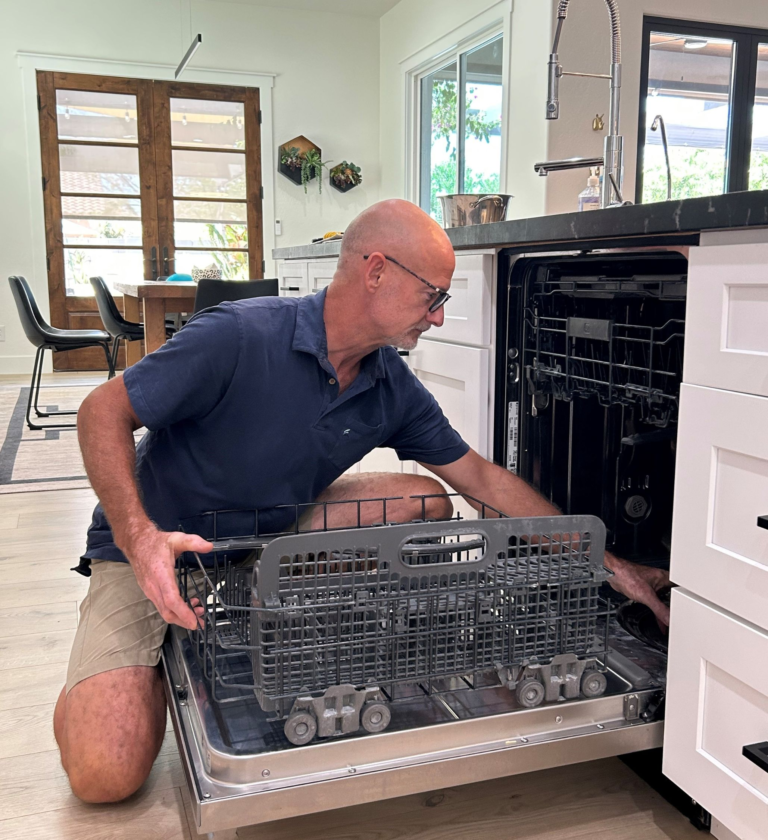
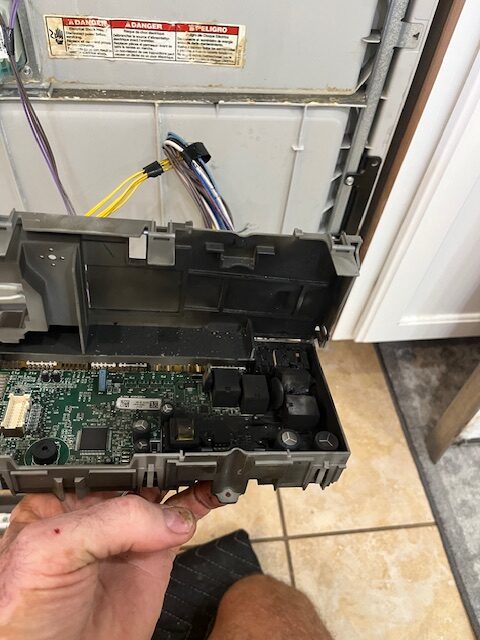
Ever noticed a funky smell coming from your dishwasher, or worse, found dirty sink water pooling at the bottom of your “clean” load? The culprit usually isn’t a broken pump—it’s a missing high loop.
At Rock Solid Appliance Repair, we see this installation oversight all the time in Queen Creek, Gilbert and San Tan Valley. Here is why this 2-minute step is the most important part of your dishwasher setup.
What is a High Loop?
A high loop is exactly what it sounds like: the drain hose from your dishwasher is looped up and secured at a point higher than the sink’s water level before it connects to the garbage disposal or sink tailpiece.
Why It Matters
Without a high loop, gravity works against you.
- Backflow Prevention: When you run your sink or disposal, dirty water can flow backward down the drain hose and into your dishwasher.
- Siphon Protection: It prevents the dishwasher from prematurely draining itself during a cycle.
- Odors: It keeps sewer gases and decaying food particles from the disposal from settling in your dishwasher tub.
How to Do It Right
If you’re DIY-ing your install, follow these steps:
- Pull the hose high: Fasten the drain hose to the very underside of your countertop or the highest point of the cabinet wall.
- Secure it: Use a specialized bracket or a simple zip-tie anchor.
- Check the Slope: Ensure the hose then slopes downward to the disposal connection so water flows away easily.
Pro Tip: Some newer models come with a built-in high loop on the side of the machine, but in many local jurisdictions (like here in Queen Creek), a cabinet-level high loop is still required by code for double protection.
Need a hand? If your dishwasher is acting up or you’re worried it wasn’t installed correctly, Contact Rock Solid Appliance Repair. We’ll make sure your kitchen stays “Rock Solid.”