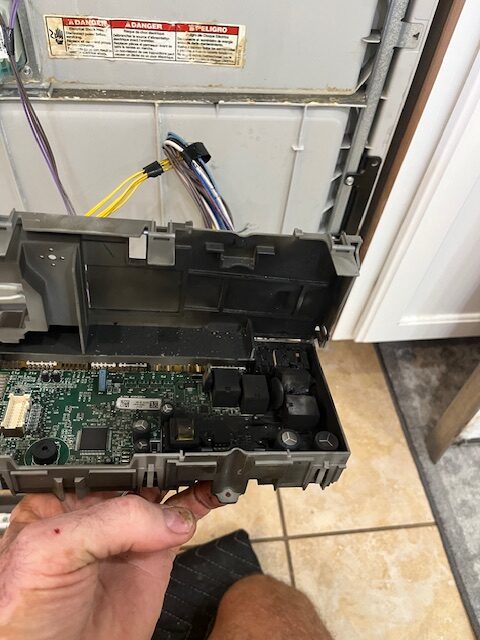
Front load washers have become incredibly popular. They’re energy-efficient, use less water than traditional top-loaders, and are gentler on clothes. But like any appliance, front load washers come with their own unique set of problems that can disrupt your laundry routine.
The good news? Most front load washer issues are repairable when caught early. Rock Solid Appliance Repair has fixed just about every front loader problem imaginable for homeowners across Queen Creek, Gilbert, and the East Valley.
The Dreaded Mildew Smell (Why Your Front Loader Stinks)
This is the number one complaint about front load washers, and it’s unfortunately very common. If your washer smells musty or like mildew, or worse—if your clean clothes come out smelling bad—you’re dealing with mold and bacteria buildup. Front loaders are prone to this because their door gaskets create an airtight seal that traps moisture inside the machine.
The rubber door boot (that accordion-like seal around the door opening) is the primary culprit. Water and detergent residue get trapped in its folds, creating the perfect environment for mold growth. The detergent dispenser drawer and the drain pump filter can also harbor bacteria and contribute to odors.
When to call a professional: If regular cleaning (running hot wash cycles with vinegar or washing machine cleaner, wiping down the gasket after each use, and leaving the door open between loads) doesn’t eliminate the smell, you may have mold growth deep in the machine’s internal components or a drainage issue preventing proper water evacuation. A technician can deep-clean internal parts or identify if there’s a mechanical problem causing water to remain in the machine.
Water Leaking from the Door (Front Load Washer Leaks)
Finding water pooling in front of your front load washer is alarming and can cause serious damage to your floors and cabinets. Door leaks on front loaders typically come from a few specific sources: a worn, torn, or moldy door gasket that no longer seals properly, a damaged or misaligned door latch, foreign objects (coins, bobby pins, small toys) caught in the door seal, or excessive suds from using too much detergent or the wrong type.
Arizona’s hard water can also cause mineral buildup that prevents the door from sealing completely. Sometimes what appears to be a door leak is actually water overflowing from the detergent dispenser or coming from a loose hose connection, so proper diagnosis is important.
When to call a professional: If you’ve checked for obvious obstructions and the leak persists, you likely need a door gasket replacement or door latch repair. These are precision parts that need to be installed correctly to create a watertight seal. Attempting DIY gasket replacement often leads to improper installation and continued leaking. Let Rock Solid Appliance Repair handle it to ensure it’s done right the first time.
The Door Won’t Open After a Cycle
Few things are more frustrating than finishing a load of laundry only to find your washer door locked tight with your wet clothes trapped inside. Front load washers have a safety lock mechanism that prevents the door from opening during the wash cycle and immediately after, but sometimes this lock malfunctions or doesn’t release properly.
Common causes include water still remaining in the drum (the door won’t unlock if the machine detects water inside), a faulty door lock assembly or actuator, a control board malfunction that isn’t sending the unlock signal, or a drainage problem preventing the machine from completing its cycle.
When to call a professional: While you can try some troubleshooting steps (unplugging the machine for a few minutes to reset it, checking if the drain cycle completed, or accessing the manual release tab if your model has one), a door that frequently won’t unlock indicates a mechanical or electrical problem that needs professional repair. Don’t force the door open, as this can damage the lock mechanism and door hinges, turning a simple repair into a much more expensive one.
Excessive Vibration and “Walking” Across the Floor
Front load washers are known for vigorous spin cycles, but your machine shouldn’t sound like it’s trying to escape your laundry room. Excessive vibration, loud banging during the spin cycle, or a washer that literally walks across the floor indicates a problem.
The most common cause is an unbalanced load, especially when washing heavy items like comforters or bath mats. However, if the problem occurs consistently even with balanced loads, you could be dealing with worn shock absorbers or suspension springs that no longer dampen the drum movement, a damaged or broken drum bearing, an unlevel washer (though it was previously level), or shipping bolts that were never removed during installation.
Front load washers rely on a sophisticated suspension system to handle the high-speed spin cycles. When these components wear out—which they eventually will with years of use—the vibration becomes extreme.
When to call a professional: If leveling your washer and distributing loads evenly doesn’t solve the problem, you likely need replacement shock absorbers, suspension springs, or potentially drum bearings. These are internal components that require disassembly of the machine. Continuing to run a washer with worn suspension components can cause damage to other parts of the machine and potentially harm your floors or surrounding cabinets.
The Washer Won’t Drain or Spin (Standing Water in Drum)
Opening your front loader to find your clothes sitting in a tub of water is a clear sign of drainage problems. The washer might complete the wash cycle but fail to drain and spin, leaving you with soaking wet, soapy clothes. Or it might drain partially but not spin at full speed.
Front load washers have a drain pump and filter system that’s more prone to clogging than top loaders. Common causes include a clogged drain pump filter (small items, lint, and debris accumulate here), a blocked or kinked drain hose, a failing drain pump motor, a faulty lid switch or door lock (the machine won’t spin if it doesn’t detect a closed door), or control board issues.
The drain pump filter on most front loaders is accessible from a small door at the bottom front of the machine. This filter catches coins, buttons, hair ties, and other small objects before they can damage the pump.
When to call a professional: While you can check and clean the drain filter yourself (consult your owner’s manual for location and procedure), if that doesn’t solve the problem, you need a technician. The drain pump may need replacement, or there could be an electrical issue preventing the spin cycle from engaging. Rock Solid Appliance Repair can diagnose whether it’s a simple clog or a component failure and get your washer draining and spinning properly again.
Error Codes Flashing on the Display
Modern front load washers have digital displays that show error codes when something goes wrong. You might see codes like “dE,” “OE,” “UE,” “LE,” or similar cryptic messages (the exact codes vary by brand). While these codes are helpful for diagnosis, they’re not always easy for homeowners to interpret or fix.
Common error codes indicate door lock issues, water supply problems (not filling or filling too slowly), drainage errors, unbalanced load detection, or motor and control board malfunctions. Some codes point to simple fixes like ensuring the water supply is turned on or redistributing the load. Others indicate serious mechanical or electrical failures.
When to call a professional: If you’ve looked up the error code in your manual and tried the suggested basic fixes without success, or if the error code keeps recurring, it’s time for professional diagnosis. Many error codes require testing electrical components with specialized equipment or accessing internal sensors that aren’t user-serviceable. A qualified technician can properly diagnose what’s triggering the error and determine if it’s a sensor issue, a failed component, or a control board problem.
Front Load Washer Maintenance Tips
To help prevent these common problems and extend your washer’s life:
- Leave the door and detergent dispenser open between loads to allow moisture to evaporate and prevent mold growth
- Wipe down the door gasket after each use, especially the bottom fold where water collects
- Use HE (High Efficiency) detergent only, and don’t use too much—front loaders need very little soap
- Clean the drain pump filter monthly to prevent clogs
- Run a cleaning cycle with washer cleaner or white vinegar monthly
- Don’t overload the machine—front loaders need room for clothes to tumble freely
- Check and clean the detergent dispenser regularly to prevent buildup
Get Expert Front Load Washer Repair in Queen Creek and Surrounding Areas
Experiencing problems with your front load washer? Rock Solid Appliance Repair specializes in all major brands including LG, Samsung, Whirlpool, Maytag, GE, Electrolux, and more. We provide same-day service throughout Queen Creek, Gilbert, Chandler, Mesa, San Tan, and Florence.
Our experienced technicians understand the unique challenges of front load washers and carry common replacement parts on our service vehicles for faster repairs. We provide honest assessments, upfront pricing with no hidden fees, and work efficiently to get your laundry routine back on track.
As a local, family-owned business, we treat your home and appliances with respect. We know how important a working washer is to your household, especially with Arizona’s active outdoor lifestyle that means plenty of laundry.
Don’t let a malfunctioning front load washer disrupt your week. Contact Rock Solid Appliance Repair today for fast, reliable service you can trust.
Call or Text 206-305-1355 with your questions or concerns.